Working Principle of DALI Dimming System
The DALI system can be regarded as a small local area network specially applied for lighting control. Its operation mechanism centers on the following four core technical points:
Digital Two-Way Communication (Core)
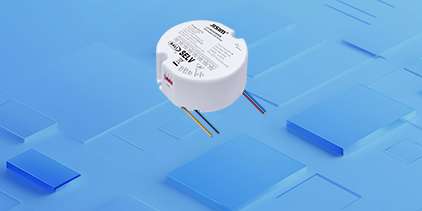
Different from traditional analog dimming solutions such as 0-10V, DALI transmits digital signals with Manchester Encoding. This coding technology uses voltage jumps to represent 0 and 1, featuring strong anti-interference capacity. Master-slave Architecture: The system consists of master controllers (gateways, control panels, etc.) and multiple slave devices (DALI LED drivers, ballasts and other devices). Master controllers send commands for slaves to receive and execute; meanwhile, slave devices can feed back operating status to master controllers.
Unique Addressing Capability
It is the most prominent advantage of DALI. Each lamp or driver on the DALI network can be assigned an exclusive digital address. Hierarchical Management: The system supports individual lamp control. Lamps can also be classified into various Groups or Scenes. Broadcast Control: Controllers send broadcast commands to synchronously control all lamps on the bus.
Hardware Connection Mode (Two-Wire System)
All devices of the DALI system are connected via a bus composed of DA+ and DA-. Dual Function of Power Supply and Communication: The two cables transmit digital signals and supply approximately 16V power for communication. Flexible Topology: Flexible wiring supports daisy chain topology, star topology and mixed topology. DALI bus wiring must comply with the insulation requirements of the connected equipment and applicable wiring rules. Whether DALI bus cables can share conduits or trays with mains cables depends on local wiring regulations and the insulation rating of all connected equipment. Confirm cable size, voltage drop and maximum distance.
Logarithmic Dimming Curve
The DALI protocol specifies a standard logarithmic dimming curve adapting to human eye physiological features. During brightness adjustment from 1% to 100%, human eyes perceive even brightness changes without abrupt shifts.
Main Advantages of DALI Dimming System
Compared with conventional TRIAC and 0-10V dimming, DALI has outstanding advantages in flexibility and intelligence:
Ultra-Fine Control Granularity (Point-to-Point Control)
It ranks as DALI’s biggest highlight. Every lamp can be controlled independently instead of full simultaneous switch of all lamps within one circuit under traditional loop control. High Flexibility: Lamps from different circuits can be grouped freely, and exclusive scenes can be set for single lamps. Diversified Scenes: The system supports complex light shows, gradual dimming effects and zoned lighting.
Two-Way Feedback (Status-reportable Lamps)
Traditional systems only send commands without execution feedback, while DALI realizes two-way communication. Status Monitoring: Lamps feed real-time status including faults, actual brightness and power consumption back to the central system. It enables fast fault positioning for maintenance of large buildings.
Low Installation and Maintenance Costs
DALI is a low-voltage digital bus, but this does not automatically mean it can be treated as SELV or installed without separation from mains wiring. Installation must follow the insulation requirements of the connected equipment and applicable wiring rules. Twisted-pair cable is commonly used for DALI bus wiring, but confirm cable size, voltage drop and maximum distance according to the DALI standard and the connected equipment. DA+/DA- terminals are typically non-polarized, but follow the manufacturer’s wiring diagram. DALI uses digital communication, which is more resistant to signal degradation than analog dimming. The standard supports a maximum bus length of 300 m, but this depends on cable size, voltage drop and the number of devices on the bus. Confirm cable size, voltage drop and maximum distance before installation.
Open Standard and High Compatibility
DALI is an open protocol not owned by any single enterprise. Certified DALI products of various brands and models can be collocated freely, for example, Philips drivers matched with Osram panels. The DALI-2 standard further improves cross-brand interoperability.
Energy Saving and Convenient Intelligent Integration
Precise Control: Cooperated with motion sensors and daylight sensors, the DALI system achieves motion-sensing lighting and automatic brightness adjustment according to natural light for maximum energy efficiency. Easy Integration: The system can connect to building management systems (BMS), KNX systems and smart home platforms via gateways.